For many investors, gold is one of the first assets they turn to when economic uncertainty is running high. When inflation rises, financial markets become volatile, or geopolitical tensions escalate, demand for gold tends to increase as well, since it's widely seen as a way to protect wealth and act as a safe haven.
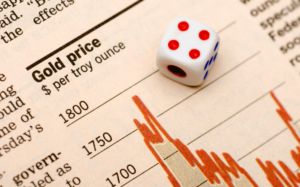
In reality, gold prices can still go up or down in line with market dynamics, regardless of its safe-haven status. Being a safe haven doesn't mean gold prices will rise every single day. Gold prices still move with the market and are shaped by a wide range of global economic factors.
So if gold is a safe haven, why can its price still fall? To answer that question, you need to first understand what safe haven actually means, why gold earned that label, and what economic factors influence gold price movements in the global market. Here's a full breakdown.
What Is a Safe Haven?
In the investment world, safe haven is a term used to describe an asset that is considered capable of holding its value when economic or financial market conditions become unstable. When a crisis hits, geopolitical tensions flare up, or economic growth slows, investors typically move a portion of their funds into assets seen as more stable in order to reduce the risk of losses.
A safe-haven status doesn't mean an asset's price never falls. These assets still experience fluctuations in line with market mechanisms. The difference lies in their ability to preserve value over the long term and their tendency to hold up better than riskier assets during periods of uncertainty.
Why Is Gold Considered a Safe Haven?
1. Its Value Has Been Recognized for Thousands of Years
Gold is one of the few assets with a long history as a store of wealth. Long before modern financial systems developed, gold was used as a medium of exchange and a symbol of value across many civilizations.
That trust has endured to this day. When economic uncertainty strikes, many investors still choose gold because of its long track record of holding value, rather than relying solely on currencies whose worth can shift in response to a country's economic policies.
2. It Helps Protect Wealth from Inflation
One of the main reasons gold is often chosen is its ability to help preserve purchasing power over the long term. When inflation rises, the value of money tends to fall, making goods and services more expensive.
In that kind of environment, gold prices often move in line with rising inflation, helping to keep its value relatively stable. While it doesn't always move in tandem with inflation in the short term, gold is frequently used as one of the instruments for helping protect asset value from the effects of inflation over a longer horizon.
3. It Doesn't Depend on the Performance of One Country or Company
Unlike stocks, which are influenced by a company's performance, or bonds, which depend on their issuer, the value of gold doesn't come from any single institution. Gold prices are formed through a global market mechanism driven by supply and demand from countries around the world.
This characteristic makes gold relatively less dependent on the economic conditions of any one company or country. When one region experiences an economic slowdown, demand for gold from other countries can still influence prices on the international market.
4. It's Liquid and Recognized Globally
Another reason gold's safe-haven appeal is so strong is its high level of liquidity. Gold is traded in almost every part of the world, making it relatively easy to buy or sell whenever investors need access to funds. Today, owning gold has become even more accessible through digital gold investment.
You can start buying gold with an affordable amount without needing to purchase a large quantity upfront, for example through the Treasury app. This accessibility has led more and more people to include gold as part of their long-term financial management strategy.
Why Can Gold Prices Fall Even Though It's a Safe Haven?
The safe-haven status of gold often leads people to assume that gold prices will always rise whenever economic turbulence hits. In practice, that's not the case. Even with its role as a value-protecting asset, gold prices still move with market dynamics and are influenced by a range of global economic indicators.
In the short term, gold prices can rise or fall in response to shifts in investor sentiment. These movements are shaped by economic conditions, central bank policy, and market expectations about where the global economy is headed. Here are some of the factors that most commonly influence gold price movements.
1. A Strengthening US Dollar
One of the most influential factors on gold prices is the movement of the US dollar exchange rate. This is because global gold prices are traded in US dollars. When the dollar strengthens against other currencies, gold effectively becomes more expensive for investors using non-dollar currencies.
This can reduce demand for gold on the global market. When demand weakens, gold prices can come under pressure as well. Beyond its effect on investor purchasing power, a stronger dollar often reflects growing market confidence in the US economy.
In situations like this, some investors choose to hold their funds in dollar-based assets rather than gold. This shift in capital flows is one of the reasons gold prices can fall even when global economic conditions haven't fully stabilized.
2. High Central Bank Interest Rates
Another factor that can push gold prices lower is interest rate policy set by central banks, particularly the Fed in the United States. When interest rates rise, interest-bearing instruments such as deposits, bonds, and government securities become more attractive because they offer higher potential returns.
Gold, on the other hand, is an asset that pays no interest or dividends. When rates are high, some investors choose to move their funds into instruments that can generate fixed income. This shift in investment preference can reduce demand for gold as a safe haven.
It's not only actual rate increases that matter. Market expectations around central bank policy can also influence gold prices. For example, when market participants expect the Fed to keep rates high for longer, gold prices often begin to correct even before any official announcement is made.
This shows that gold prices are affected not only by what has already happened in terms of policy, but also by what investors expect to happen next. That said, when central banks start signaling rate cuts, gold's appeal tends to pick up again.
3. Inflation Coming Under Control
Inflation is one of the main reasons many investors turn to gold as a safe haven. When the prices of goods and services keep rising, the value of money tends to decline, making gold a go-to asset for helping preserve purchasing power over the long term.
Conversely, when inflation data shows a trend toward being more controlled or comes in lower than the market expected, concerns about the erosion of money's value ease as well. In that environment, some investors feel less urgency to allocate heavily into gold because inflationary pressure appears to be subsiding.
Lower inflation data also tends to reinforce optimism that economic conditions are improving. When that happens, investor appetite for riskier assets such as stocks can increase, and some funds that had been parked in gold may move into other instruments.
Does a Gold Price Drop Mean the Safe Haven Is No Longer Effective?
Not at all. A safe-haven status for gold doesn't mean its price will keep rising without any correction. Price fluctuations are a normal part of how markets work, just as they are for any other investment instrument. What keeps gold classified as a safe haven is its ability to preserve asset value over the long term.
Historically, gold has demonstrated its worth during periods of economic uncertainty, high inflation, and geopolitical turmoil. That's why investors generally don't just look at daily price movements. They also consider the role gold plays as part of a broader diversification and long-term value protection strategy.
If your goal is to build assets for the long term, a correction in gold prices isn't necessarily something to worry about. In fact, it can be an opportunity to gradually add to your gold holdings at a relatively lower price.
When gold prices recover in the future, that price difference has the potential to generate a return while also strengthening the value of the assets you've already accumulated. So rather than fixating on day-to-day gold price movements, view gold investment as part of a long-term financial strategy.
If you'd like to start building gold assets in a practical way, digital gold investment through the Treasury app is worth considering. You can accumulate gold gradually in line with your financial capacity, anytime and anywhere. Start investing in gold today and let every gram you collect become a step toward a more secure financial future!