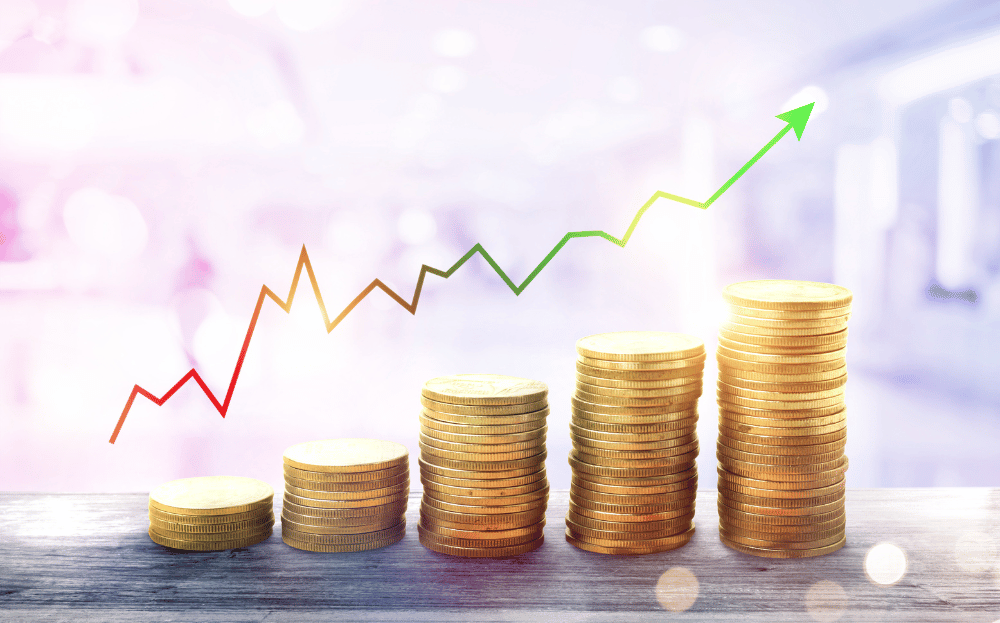
Gold prices often become a hot topic in the investment world, especially when significant movements occur. Just last week, global gold prices even broke an all-time high, reaching USD4.669,69 per troy ounce. But do you know, why gold prices go up?
Gold remains a popular investment instrument across generations, from older to younger investors. Many are drawn to gold as a safe-haven asset, particularly when global economic and political conditions are unstable.
There are several factors that explain why gold prices can rise, both on a daily basis and cumulatively over the course of a year, often creating positive outcomes for investors. To better understand this, let’s take a closer look at the full explanation below.
1. U.S. Monetary Policy Influences Rising Gold Prices
One of the main reasons gold prices rise is the monetary policy implemented by the United States, particularly by the Federal Reserve (the Fed). Monetary policies such as changes in interest rates have a direct impact on gold prices.
When the Fed cuts interest rates, gold becomes more attractive to investors because it does not offer yield. As a result, investors tend to shift their assets into gold, which is seen as a way to preserve value.
On the other hand, when interest rates rise, investors often move their funds into government bonds to benefit from higher returns. However, there are times when gold prices still increase despite high interest rates, especially when economic uncertainty triggered by such policies remains elevated.
2. A Stronger Dollar Index as a Reason Why Gold Prices Rise
The U.S. Dollar Index measures the value of the dollar against other major global currencies. Movements in the dollar index are an important factor in explaining why gold prices rise, as gold is priced in U.S. dollars.
When the dollar index weakens, gold becomes cheaper for investors holding other currencies. Lower gold prices tend to attract more buyers, increasing demand and pushing gold prices higher.
That said, it is also possible for gold prices to rise when the dollar index strengthens. This typically happens during periods of significant global economic uncertainty, when investors seek safe assets like gold to protect their wealth.
In other words, even if the dollar is strengthening, high demand for gold can still drive prices upward. This is why the relationship between the dollar index and gold prices can be complex and highly dependent on broader economic conditions.
3. Global Economic and Geopolitical Uncertainty
Economic and geopolitical uncertainty is another strong reason why gold prices rise. During periods of global instability, such as wars, financial crises, or international trade tensions, investors tend to turn to gold as a safe-haven asset.
Gold is considered a safe haven because its price is relatively stable and less affected by inflation, making it a reliable store of value compared to currencies or stocks, which can be highly volatile in uncertain times.
This pattern is also evident during geopolitical instability, such as renewed tensions in the Middle East or conflicts involving major global powers. In response to rising demand for safety, gold prices tend to move higher.
4. Rising Gold Prices May Be Driven by Market Demand
Market demand is one of the primary reasons why gold prices rise. This demand comes from various sectors, including jewelry, investment, and industry. In countries such as India and China, demand for gold jewelry is particularly strong, especially during wedding seasons and major festivals.
Investment demand also plays a crucial role. When global investors feel uncertain about other assets, they are more likely to buy gold as a form of protection. In addition, gold purchases by central banks around the world further support higher gold prices.
This was seen in China in early 2024, when gold prices remained at elevated levels as the country aggressively increased its gold purchases to diversify national assets. It is estimated that China currently holds gold reserves totaling around 5,542 tons.
5. Limited Gold Supply Pushes Prices Higher
Gold is a precious metal classified as a finite and non-renewable natural resource. This is because gold is formed through geological processes that take hundreds, if not thousands, of years.
Global gold production has reached its peak in recent years. Declining production output has reduced supply, making it another key reason why gold prices continue to rise.
Moreover, gold mining and production costs are increasing as easily accessible gold deposits are gradually depleted. Remaining mines are often located in more challenging and expensive areas to develop.
Rising production costs combined with limited supply have led to projections that gold prices will continue to climb as new sources of gold become increasingly difficult to find.
The increase in gold prices is the result of a combination of interconnected factors. Understanding why gold prices rise can help you make better and more strategic investment decisions.
By knowing the factors that influence gold prices, you can plan investments more effectively and take advantage of favorable price movements. Despite short-term fluctuations, gold remains a stable and reliable asset over the long term.
So, let’s start your gold investment journey with Treasury!